

News
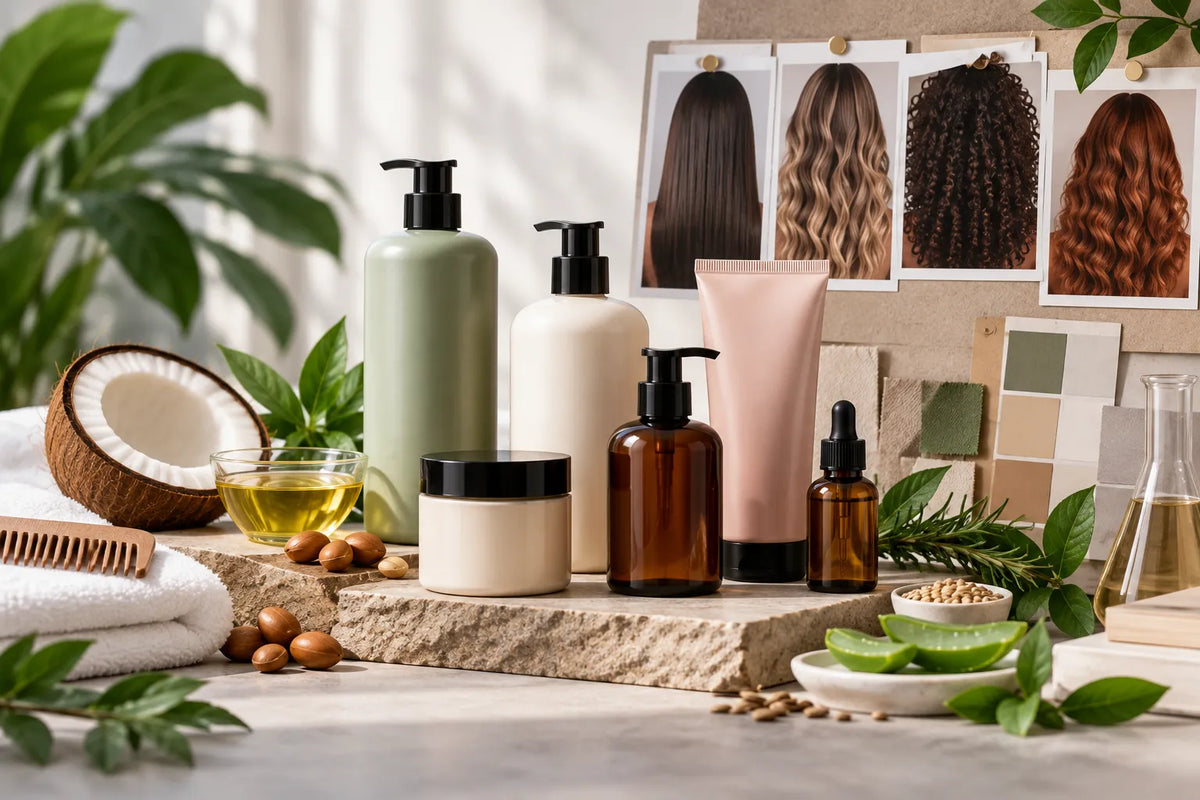

Wholesale Shampoos and Conditioners: How to Choose Products for Different Hair Types
The most reliable way to choose is by porosity, low, medium, or high, not just by visual texture like straight, wavy, or coily. Porosity determines how well hair actually absorbs and holds moisture, and it's the detail that decides whether a formula works. Two customers with the exact same hair type can have completely different porosity, and completely different needs. Stocking wholesale shampoos and conditioners around porosity instead of texture alone is what turns a one-time sale into a reorder. The Quick Way to Check Porosity Drop a clean strand of hair into a glass of water and watch what happens. Hair that sinks fast has high porosity, hair that floats has low porosity, and hair that sinks slowly sits in the middle. This simple test takes under a minute and gives customers, or your sales team, a clear starting point before choosing a formula. Low Porosity: Hair That Resists Moisture Low porosity hair has tightly closed cuticles, so product tends to sit on top instead of absorbing. Heavy creams and butters mostly just sit there. They build up instead of soaking in. Look for lightweight, water-based wholesale shampoos and conditioners with humectants like glycerin. They pull moisture in without dragging hair down. Toss in a clarifying formula now and then, and buildup stays out of the picture. Medium Porosity: The Easiest Hair to Work With Medium porosity hair is the easy customer. It takes in moisture at a steady, predictable pace, and most standard wholesale shampoos and conditioners do the job without any tweaking. The real risk here isn't the hair itself, it's what happens to it. Color treatments and heat styling can push medium porosity toward high porosity over time. A balanced formula, moderate protein, moderate moisture, covers most people in this group. High Porosity: Hair That Loses Moisture Fast High porosity hair has raised or damaged cuticles. Moisture rushes in, then rushes right back out. This hair type needs richer formulas that seal moisture in, not just add it. Porosity How to Test What to Stock What to Avoid Low Strand floats in water Lightweight, water-based, humectants Heavy butters, protein-heavy formulas Medium Strand sinks slowly Balanced protein-moisture formulas Frequent over-processing High Strand sinks quickly Rich sealants, black castor oil, deep conditioners Formulas without a sealing step Wholesale shampoos and conditioners built with black castor oil or other heavy sealants work well here, since this hair type needs a barrier to hold onto moisture after washing. Building an Inventory That Covers All Three Stock at least one clarifying, one balanced, and one deep-moisture option to cover the full porosity range. A single generic formula rarely satisfies the whole spectrum of customers walking through your door. Retailers who bundle a starter trio (one per porosity level) tend to see fewer one-and-done purchases, since customers are more likely to find something that actually works for their hair on the first try. Ask This One Question Before You Stock a New Line Ask the supplier what porosity range a formula was designed for, not just what hair type it targets. A supplier who can answer this in detail understands hair science, not just marketing language. Wholesale shampoos and conditioners marketed only by generic hair type (curly, straight, wavy) without any mention of porosity or moisture behavior are usually formulated more broadly, and may underperform for customers at either end of the porosity spectrum. Stock a Porosity-Ready Lineup With Us Our haircare catalogue includes black castor oil, rice water, and tea tree and peppermint formulas alongside the Hair Star shampoo and conditioner line, giving you real coverage across porosity levels without guessing. Every formula ships with a low minimum order so you can test what actually moves before committing to a full case. Building a porosity-based starter set? Get in touch with and stock wholesale shampoos and conditioners your customers will actually reorder.
Learn more
Private Label Men's Skincare Manufacturer in the USA: What Should You Look For?
Five things: certification, US-based production, low minimum orders, clear documentation, and real label support. Miss any one of these, and you'll find out the hard way, usually after you've already committed. A private label men's skincare manufacturer is a long-term partner, not a one-time vendor. Vet them the way you'd vet any partner you're trusting with your brand's reputation. Confirm Certification Before Anything Else Ask whether the facility is GMP-ISO certified before discussing products or pricing. This single certification tells you whether production is consistently audited and controlled batch to batch. A private label men's skincare manufacturer without this certification may still make a fine product once, but consistency across hundreds of orders is where uncertified facilities tend to slip. Don't skip this question just because a sample smells and feels right. Check Whether Production Is Actually US-Based Confirm where the product is physically made, not just where the company is headquartered. A "Made in the USA" claim should match an actual manufacturing address you can verify. US-based production usually means you can actually get someone on the phone. Turnaround tends to be faster, and you're not left guessing whether a label meets US rules. Overseas production can still be reputable. But the shipping timeline and the communication gap are real, and they're worth weighing before you sign anything. Ask About Minimum Order Quantities Early A low MOQ lets you test a men's line before betting your full budget on it. Ask this question before you fall in love with any specific formula. What to Ask Why It Matters What's the minimum order per SKU? Determines how much cash you tie up testing one product Can I order a sample before committing? Lets you check texture and scent on real skin first What's the turnaround after art approval? Sets your realistic launch date Is COA/MSDS available on request? Confirms the manufacturer can back up safety claims A private label men's skincare manufacturer that requires thousands of units per product before you've sold a single bottle is a risky first partner for a new brand. Request Documentation Before You Sign Anything Ask for a Certificate of Analysis and Safety Data Sheet for any formula you're considering. These documents confirm what's actually in the product and that it's been tested for skin safety. Retailers stocking your men's line will eventually ask you for this same paperwork. Get comfortable requesting it now, so you're not scrambling to track it down after your first wholesale order comes in. Evaluate Their Label and Design Support Ask whether the manufacturer offers label design help, or only accepts print-ready artwork. Not every new brand owner has a designer on staff, and that gap can stall a launch for weeks. A private label men's skincare manufacturer that confirms label sizing and placement before printing saves you from an expensive reprint. This is a small detail that separates an experienced partner from a newer operation still working out their own process. Watch for These Red Flags A manufacturer that won't quote a straight answer on MOQ, turnaround, or documentation is telling you something. Vague answers to direct questions rarely improve once you're a paying customer. Also be cautious of any manufacturer offering suspiciously low prices with no minimum order requirements at all. Quality formulation, real certification, and low prices rarely come together at the same time. Choose Your Manufacturing Partner With Us We manufacture in a GMP-ISO certified, US-based facility, with MOQs low enough to start small and documentation available on request for every formula. Our label-application service confirms sizing before anything goes to print, so your first batch comes out right. Talk to us at Wholesale Natural Body Care. Request a sample before you place a full order.
Learn more
How to Start a Private Label Fragrance Oil Business: A Step-by-Step Guide
Five things: business registration, a reliable supplier, a brand identity, starting inventory, and a sales channel. Skip one and launch day gets harder than it needs to be. None of these steps require a lab, a chemistry degree, or a warehouse. They require a plan and a supplier who can back you up on private label high quality fragrance oils from day one. Register the Business Before You Sell Anything Pick a business structure and register it in your state before your first sale. This step protects your personal finances if anything goes wrong later. Structure Setup Cost Personal Liability Best For Sole proprietorship Low, often free You're personally liable Testing the idea first LLC Moderate, state filing fee Business is liable, not you Selling at real volume After you register, apply for a free EIN at IRS.gov (it takes about five minutes) and open a separate business bank account. Mixing personal and business money makes taxes miserable later. Vet Your Fragrance Oil Supplier Before You Commit Your supplier decides your product quality, so this choice matters more than your logo. Ask for a sample size before ordering anything larger. A supplier of private label high quality fragrance oils should hand over documentation (COA and MSDS) without hesitation, quote a minimum order you can actually afford, and tell you their standard turnaround time. If they dodge any of those three questions, keep looking. Order a sample size in two or three scents before committing to a full batch. Test the oil in your actual base, not just from the bottle, since scent can shift once it's mixed into wax or a body oil. Build a Brand Identity Before You Design a Label Check trademark availability using the free TESS search tool on the USPTO website before you fall in love with a name. Nothing kills momentum like a cease-and-desist letter six months in. Once your name is clear, lock down the matching domain and social handles, then build a simple logo. Consistency across your website and packaging is what makes a new brand feel established instead of thrown together. Choose One Scent Category to Start Pick one category first: candles, body oils, or home fragrance mists. Trying to launch all three at once splits your attention and your budget before you know what actually sells. Private label high quality fragrance oils work differently depending on the base they're going into, so mastering one category teaches the fundamentals first. Add a second category once your first one is generating repeat sales. Get Financially Ready Before You Order in Bulk Set a budget before you place a single order, and buy only what you can realistically store and sell within a few months. Oversized inventory is the single most common reason new fragrance brands stall out. Track every dollar from day one, including packaging, labels, and shipping supplies, not just the oil. A clear budget keeps you from a cash shortage right when your first orders start coming in. Pick Where You'll Actually Sell Choose one or two sales channels to start: your own website, a marketplace like Etsy, local craft fairs, or wholesale to boutiques. Spreading across five channels on day one usually means none of them get the attention they need. Research what similar brands charge on the same channel before setting your price. Your price should cover your cost, your time, and a real profit margin, not just materials. Launch Your Fragrance Line With Us We supply private label high quality fragrance oils with samples available before you commit to a larger order, so you can test scent and quality first. Every order ships from our GMP-ISO certified facility with documentation available on request. Ready to start? Browse our fragrance oil collection at Wholesale Natural Body Care, request a sample of the scents you're considering, and build your first line around what actually sells.
Learn more
What Makes Wholesale Natural Skincare Products Different From Regular Skincare Products?
Wholesale natural skincare products use plant-based, minimally processed ingredients instead of heavy synthetic fillers. They also skip parabens and undisclosed additives common in mass-market lines. The difference isn't marketing language. It shows up in the ingredient list, the certification paperwork, and how the product performs on skin over time. Ingredient Sourcing Is the First Real Difference Regular skincare products often prioritize shelf stability and low cost over ingredient quality. Wholesale natural skincare products prioritize active, recognizable ingredients, like green tea, oatmeal, snail mucin, and rose, over filler bases, which takes more formulation expertise, not less. Certification and Documentation Set Natural Products Apart A genuine natural line can back up its claims with paperwork. Ask for a Certificate of Analysis and confirm whether the facility is GMP-ISO certified before trusting any "natural" label. Wholesale natural skincare products from a certified manufacturer come with traceable sourcing and batch testing. Regular commercial lines rarely offer this level of transparency to a retailer, let alone to the end customer. Formulation Philosophy: Fewer, Cleaner Ingredients Natural formulations tend to use fewer total ingredients, with each one doing real work. Regular skincare often relies on long ingredient lists padded with inexpensive fillers and synthetic fragrance. Feature Regular Skincare Wholesale Natural Skincare Products Ingredient list Long, synthetic-heavy Shorter, plant-based Paraben use Common Avoided Cruelty-free status Varies Standard practice Documentation Rarely offered COA & MSDS on request Active ingredients Often masked by fillers Front and center Active Ingredient Categories Worth Knowing Natural doesn't mean weak. Bakuchiol, vitamin C, retinol, and kojic acid all appear across serious natural skincare lines, and bakuchiol in particular is widely used as a gentler, plant-based alternative to retinol for people who find retinol irritating. Wholesale natural skincare products built around these actives target real concerns, including brightening, anti-aging, and acne, without relying only on synthetic alternatives to get there. Customers increasingly check ingredient lists before buying, especially for products used daily. Stocking wholesale natural skincare products gives retailers a straightforward answer when a customer asks what's in the bottle, which builds trust faster than a generic ingredient list and tends to support better reorder rates. How to Spot a Natural Claim That Isn't Backed Up "Natural" isn't a regulated term in most places, which means anyone can print it on a label. The only way to verify the claim is to check the actual ingredient list, not the marketing copy on the front of the bottle. Look for recognizable plant names near the top of the ingredient list, not buried after a dozen synthetic compounds. Wholesale natural skincare products from a credible manufacturer will list active botanicals early, because they make up a meaningful percentage of the formula rather than a token amount added for the label. Matching Natural Formulas to Skin Type Still Matters Natural doesn't mean one-size-fits-all. Oily and acne-prone skin responds well to tea tree and charcoal-based lines, while dry or mature skin does better with rose, hyaluronic, or oatmeal and honey formulas. Retailers who stock a single generic "natural" line often see slower reorders than those who stock two or three targeted options. Matching products to specific skin concerns gives customers a reason to pick your shelf over a one-size-fits-all competitor. Before stocking any line, confirm paraben-free and cruelty-free status directly rather than taking a label's word for it. Stock a Line Built Around Proven Actives Our catalogue of more than 1,400 products includes dedicated collections for brightening (alpha arbutin, kojic acid), anti-aging (bakuchiol, retinol, vitamin C), and calming skin types (green tea, oatmeal and honey, snail mucin). Each collection is formulated as a standalone line, so retailers can stock a focused shelf instead of one generic natural product. Browse our natural skincare collections at Wholesale Natural Body Care and match a formula to the skin concern your customers actually ask about.
Learn more
Can a Private Label Haircare Products Manufacturer Help Create a Custom Haircare Line?
Yes. A private label haircare products manufacturer can build a custom line around your ingredients, texture, and scent preferences. You don't need your own lab to do it. The manufacturer handles formulation, testing, and production. You focus on the brand, the audience, and the marketing. Step One: Start With a Sample, Not a Full Order A reliable private label haircare products manufacturer always starts with samples. Order singles or a small sample kit before committing to a bulk run. Test the formula on real hair, not just in a bottle. Texture, scent throw, and how a product rinses out all matter more once it's actually used, not just examined on a shelf. Step Two: Choose a Base or Request a Custom Formula You have two paths here. Pick from an existing catalogue of proven formulas, or brief a private label haircare products manufacturer on something that doesn't exist yet. Popular custom directions include: Argan or batana oil-based treatments Rice water or apple cider vinegar rinses Chebe-based growth formulas Rosemary and mint or tea tree and peppermint blends Sea moss-infused conditioners A capable manufacturer can build around any of these, adjusting actives, thickness, and fragrance to match your brief. Step Three: Brand It With Your Own Label Once the formula is locked, labeling comes next. Upload your own artwork, or use a label-application service if you don't have a designer on staff. A good private label haircare products manufacturer will confirm sizing and placement before anything goes to print. This step is where a generic base officially becomes your product. Step Four: Production, Filling, and Fulfillment The manufacturer fills, labels, and packs the finished product in a certified facility. Ask specifically about GMP-ISO certification, since it signals consistent, audited production standards. Step What Happens What You Provide Sample Test formula on real hair Feedback Formulate Choose base or request custom Ingredient brief Brand Apply your label Artwork Produce Fill, label, pack Final approval This four-step path is how a private label haircare products manufacturer turns an idea into inventory, with timing that depends on whether you're using a stock base or a full custom formulation. Two Levels of Customization Exist: Know Which One You Need Not every custom request needs a brand-new formula built from scratch. A private label haircare products manufacturer usually offers two tiers, and picking the right one saves time and money. The first tier is simple customization: adjusting fragrance, color, or thickness on an existing base. The second is full custom formulation: building texture, actives, and claims from scratch. Most new brands only need the first tier to start. Quality Control Doesn't Stop at the First Batch Formula consistency matters as much on order fifty as it did on order one. Ask how a private label haircare products manufacturer tests batch-to-batch consistency, not just the sample you approved. A manufacturer that skips this step risks shipping a product that smells or feels slightly different from what customers already trust. What to Ask Before You Commit Ask about minimum order quantities, turnaround time, and whether COA and MSDS documentation is available. These three answers tell you almost everything about how the manufacturer actually operates. A manufacturer that can't answer clearly on any of the three isn't ready to be your long-term partner. Formulate With Us We offer both simple customization and full custom formulation, built around ingredient lines including argan, batana, chebe, rice water, and sea moss. Every custom formula goes through the same GMP-ISO certified process as our stock catalogue, with COA and MSDS documentation available on request. Request a formulation through Wholesale Natural Body Care. Describe your brief, including texture, actives, scent, and claims, and we'll follow up on timeline and minimums before you commit to anything.
Learn more
Private Label vs Wholesale Shampoos and Conditioners: Which Is Better for Your Business?
Private label gives you your own brand name on the bottle. Wholesale shampoos and conditioners ship under the manufacturer's existing brand instead. The right choice depends on whether you're building brand equity or just moving product fast. Both models can be profitable. They just serve different stages of a business. What "Private Label" Actually Means Here Private label means the formula already exists, but the label displays your business name. You choose the bottle, the design, and the price point on shelf. This route gives you full control over positioning. Two brands can sell the exact same base shampoo at very different price points, purely because of packaging and story. What "Wholesale" Actually Means Here Wholesale shampoos and conditioners are sold as a finished, branded product that you resell as-is. You're not building your own name, you're stocking someone else's. This is common for salons, spas, and retailers who want inventory on the shelf without managing formulation, label design, or compliance paperwork themselves. Comparing the Two Side by Side Factor Private Label Wholesale (Branded) Brand ownership Yours Manufacturer's Startup cost Higher (labels, design) Lower (ready to sell) Margin control You set retail price Often suggested retail Time to launch Days to weeks, after art approval Immediate Long-term brand equity Builds your name Builds the manufacturer's name Wholesale shampoos and conditioners suit businesses that need inventory now and aren't focused on building a standalone brand. Private label suits businesses playing a longer game. Margins Look Different Between the Two Models With private label, you typically buy the base cost and set your own retail price, which is where most of the margin lives. A shampoo costing around $17 wholesale can sell at a suggested retail near $48, putting the margin firmly in your hands. With wholesale shampoos and conditioners sold under someone else's brand, margins are often narrower because the manufacturer has already built brand value into the price. You're paying, in part, for their name recognition. Which One Should You Choose? Choose private label if you plan to market under your own name, build a customer base, and eventually expand into a full line. Choose wholesale shampoos and conditioners if you need reliable inventory fast and brand-building isn't the current priority. Some businesses do both: wholesale to fill shelf space today, private label to build equity for tomorrow. There's no rule against running them side by side while you decide. Reordering Matters More Than Most People Plan For Whichever model you choose, check how easy reordering is before you commit to a supplier. A slow reorder process quietly kills momentum once a product starts selling. Look for a supplier that lets you reorder by SKU instead of rebrowsing a full catalogue every time. Pasting a code and quantity into an order pad takes minutes; hunting through a hundred-plus collections wastes an afternoon during a busy sales week. A brand-new salon or spa often starts with wholesale shampoos and conditioners just to have something on the shelf while the business finds its footing. A business further down the road, with customers asking for the product by name, is usually ready for private label. The branding pays for itself through repeat sales a generic bottle can't generate. Start Either Path With Us At Wholesale Natural Body Care, we offer both paths under one roof: ready-to-sell wholesale shampoos and conditioners, and private label formulas you can brand as your own. Our Hair Star shampoo and conditioner holds roughly a 65% suggested margin at listed pricing, and our online order pad lets returning customers reorder either version in under a minute. Talk to our team, request samples of both routes, and decide with product in hand instead of guessing from a spec sheet. Reach out to Wholesale Natural Body Care today to get started.
Learn more
What Products Should Every Private Label Men's Skincare Line Include?
A private label men's skincare line needs five core products: a cleanser, a moisturizer, an exfoliant, beard care, and a targeted treatment. Skip any of these and your line looks thin next to competitors. Men shop differently than the broader skincare market. They want fewer steps, plain instructions, and a product that solves one specific problem instead of five vague ones. Start With a Cleanser Built for Daily Use Every private label men's skincare line starts with a face and body cleanser. Many men use one product for both, so plan the formula and label copy around that habit. Look for a cleanser that removes oil without stripping the skin barrier. A tea tree or charcoal base works well, since it also functions as a light acne treatment for younger buyers. Add a Moisturizer That Doesn't Feel Greasy A lightweight, fast-absorbing moisturizer is non-negotiable. Heavy creams get left on the shelf, since male shoppers often associate them with women's skincare packaging. Gel or lotion formulas with a matte finish perform best here. This one product often decides whether a customer reorders your private label men's skincare line at all. Don't Skip Beard and Ingrown Hair Care Beard oil, beard balm, and an ingrown hair treatment round out the grooming side of a complete line. These are high-margin items with strong repeat-purchase rates. Ingrown hairs and razor bumps are a daily frustration for men who shave regularly. A private label men's skincare line that skips this category is leaving an easy, loyalty-building upsell on the table. Round Out the Line With a Body Wash and a Scrub A matching body wash extends your brand past the bathroom sink. Pair it with an exfoliating scrub for the back, shoulders, and other spots prone to bumps and ingrown hairs. Category Core Product Why It Matters Face Cleanser Daily-use anchor product Face/Body Moisturizer Drives repeat purchases Grooming Beard oil & balm High margin, high loyalty Body Wash + scrub Extends the brand, bundles well Targeted Ingrown hair treatment Solves a specific pain point Bundling these two items into a starter kit gives a new customer a reason to try your full private label men's skincare line in one purchase, instead of testing a single bottle first. Packaging That Matches How Men Shop Matte black, navy, and unlabeled amber bottles read as masculine without a single word of copy. Simple, direct label text outperforms long ingredient stories in this category. Keep instructions to one line: what it does, how to use it, how often. Men respond to clarity far more than romantic ingredient storytelling. Price the Line to Reflect the Category Men's grooming products come with different price expectations than general skincare. Customers expect to pay a bit more for beard oil and targeted treatments, and less resistance for a basic cleanser or wash. A private label men's skincare line typically performs best when the entry product is priced to compete with drugstore options, while beard oil and targeted treatments hold the higher margin. The entry point earns trust, and the specialty items earn revenue. New brands tend to repeat the same mistakes: launching scented-only, skipping ingredient callouts, and ordering too many SKUs before testing which sell. A tighter lineup of four or five products outperforms a scattered fifteen-item catalogue. Build Your Line With Us Our men's grooming range includes beard oil in both unscented and essential-oil blends, alongside ingrown hair and brightening formulas built specifically for razor-prone skin. Every item ships from our GMP-ISO certified facility with a low minimum order, so testing a new private label men's skincare line doesn't require a warehouse-sized commitment. Talk to our team at Wholesale Natural Body Care about bundling a starter kit!
Learn more
How to Choose the Best Private Label High Quality Fragrance Oils for Your Brand
A high quality fragrance oil is skin-safe, IFRA-compliant, and consistent batch to batch. Private label high quality fragrance oils meet all three standards before they reach your bottle. Anything less puts your brand's reputation at risk. Cheap oils often skip safety testing and can contain unlisted allergens. Choosing the right supplier from day one protects your customers and your margins. Check the Safety and Compliance Paperwork First Ask for a Certificate of Analysis and a Safety Data Sheet before you buy anything. These two documents confirm what's in the oil and whether it's cleared for skin contact. Private label high quality fragrance oils always ship with traceable documentation. A supplier who hesitates to share COA or MSDS paperwork is telling you something important, and retailers will ask for this too. Get it in writing before launch, not after a complaint. Match Oil Strength to Your Product Type Fragrance strength has to match the base it's going into. A candle needs a heavier concentration than a facial lotion, and getting it wrong wastes oil or overwhelms the skin. Use this as a general starting point. These are common industry ranges, not a fixed rule, so confirm actual usage rates with your supplier: Product Type Recommended Oil Load Lotions & creams 1–2% Body wash & soap 2–4% Body oils & mists 5–10% Candles & wax melts 6–10% Private label high quality fragrance oils are formulated to hold scent throw across these ranges. A supplier who can't give you a usage rate likely hasn't tested the oil in real applications. Test Before You Commit to a Full Batch Order a sample size before you order by the gallon. Apply the oil to your actual base, not just a smelling strip, since scent shifts once it meets a cream, gel, or soap. Heat and pH both alter how a fragrance reads. A small test batch costs far less than discarding a full production run that smells wrong once it's finished. Compare Cost Per Ounce, Not Just the Sticker Price A $12 bottle isn't automatically cheaper than a $40 bottle. Break every quote down to cost per ounce before comparing suppliers. Bulk pricing tiers matter too. Private label high quality fragrance oils typically get cheaper per ounce moving from a sample size to a gallon or drum. Ask for the full pricing ladder up front. Designer-Inspired Scents Come With Extra Rules A "designer-inspired" fragrance oil is built to smell like a well-known perfume without using its name or trademark on your label. This is standard practice, but it comes with a boundary to respect. Never print the original perfume's brand name on your label, even as a comparison. Give private label high quality fragrance oils in this category your own descriptive name to stay protected and keep the focus on your brand. Think About Longevity, Not Just First Impression A fragrance oil can smell incredible straight out of the bottle and still fade fast once it's finished. Ask your supplier about "throw," meaning how far and how long the scent projects. Body oils need strong throw since they're worn for hours. Candles need both "cold throw" (unlit) and "hot throw" (burning) to satisfy a shopper in-store and at home. A supplier who only discusses initial strength is giving you half the picture. Three to five signature scents is plenty to start. Launching fifteen at once usually means none get proper attention, and inventory piles up on the slow sellers. Putting It All Together The right supplier gives you four things unprompted: documentation, usage guidance, sample sizes, and transparent, tiered pricing. If they can't offer all four, keep looking. Browse our fragrance oil collection at Wholesale Natural Body Care, request the COA on any scent that catches your eye, and start with a small batch before scaling into a full line.
Learn moreFrequently Asked Questions
Wholesale Natural Body Care makes it easy to launch your own private label skincare, hair care, body care, beard care, and fragrance brand. Explore our simple startup guide, estimated startup costs, launch timelines, required supplies, and answers to the most frequently asked questions—all designed to help entrepreneurs build profitable beauty and personal care brands with confidence. With premium formulations, low minimums, over 250 signature fragrances, and professional manufacturing in the USA, WNBC is your trusted partner from concept to launch.
Learn more