

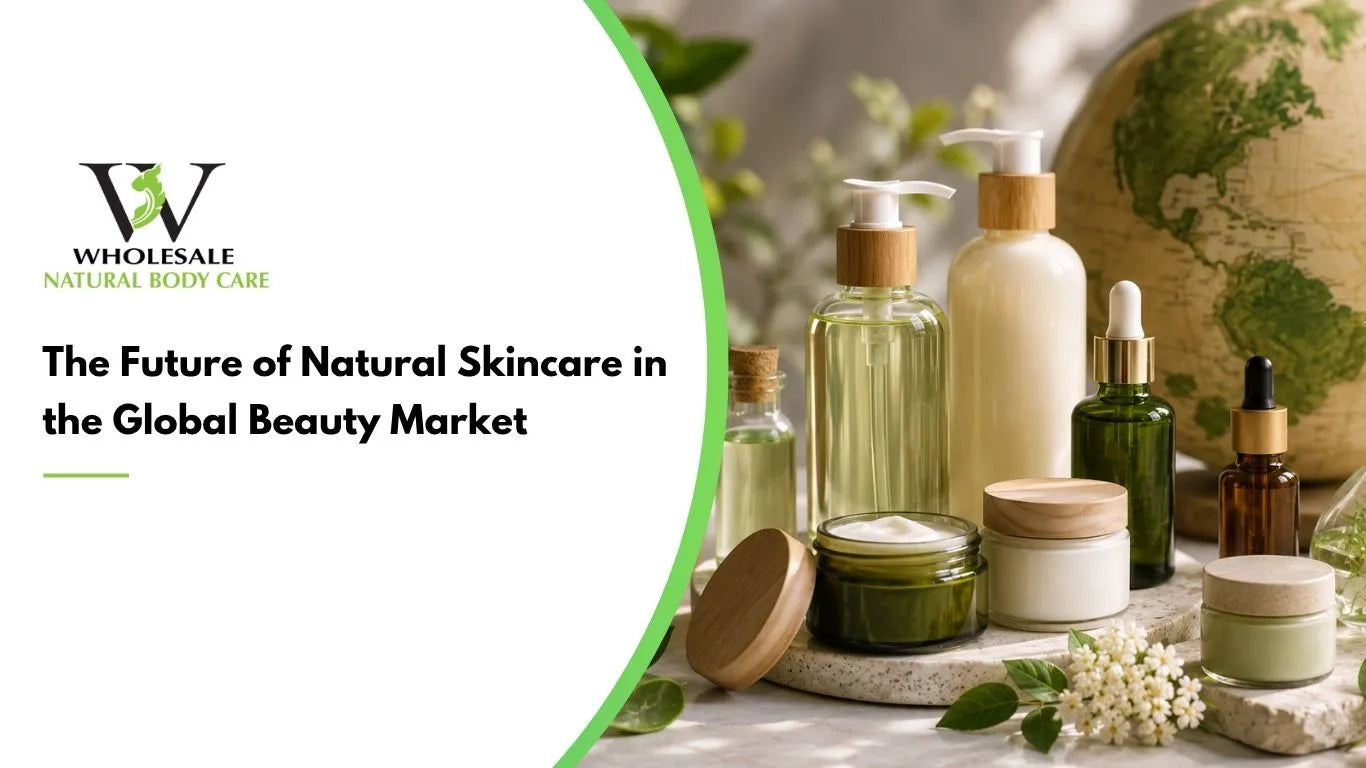
The future of natural skincare is one of steady, accelerating growth, driven by consumers who want ingredient transparency and formulas free from harsh synthetic chemicals. Global clean beauty sales are on track to grow from roughly 11 to 12 billion dollars in 2026 to well over 30 billion dollars within the next several years, with skincare making up the largest share. As demand rises, more retailers and salons are sourcing Wholesale Natural Skincare Products to meet customer expectations without paying premium boutique pricing.
How Big Is the Natural Skincare Market Right Now?
Clean and natural skincare already makes up close to half of the broader clean beauty category, driven by daily-use products like cleansers, moisturizers, and sunscreens. Industry researchers project double-digit annual growth for this segment through the early 2030s, well ahead of the beauty industry as a whole. North America currently holds the largest regional share, supported by strong demand for ingredient transparency and a maturing supply chain of natural formulators.
Why Are Retailers and Brands Choosing Wholesale Natural Skincare Products?
Sourcing Wholesale Natural Skincare Products lets retailers, spas, and small brands offer natural formulas at accessible prices instead of relying on premium boutique suppliers. Buying in bulk from an established manufacturer also means consistent formula quality and ingredient documentation, both of which matter more as customers scrutinize labels closely. For many small businesses, this is the practical bridge between wanting a natural product line and being able to afford one.
What Trends Are Shaping the Future of Natural Skincare?
Several trends are reshaping this space. Consumers increasingly favor short, recognizable ingredient lists over long chemical names. Sustainable packaging is becoming a purchase driver rather than an afterthought. Personalization, including formulas suited to specific skin types, is moving from niche to mainstream. Together, these shifts are pushing manufacturers to refine formulas rather than simply market conventional products with a green label.
How Can You Tell If a Skincare Product Is Genuinely Natural?
A genuinely natural skincare product minimizes synthetic additives and lists plant-derived or mineral-based ingredients near the top of its ingredient panel. Look for third-party certifications, batch testing documentation, and a supplier willing to share sourcing details. Marketing language alone is not proof, since regulators have acted against brands using "natural" loosely without substantiation.
Natural vs Conventional Skincare: What Is the Difference?
|
Feature |
Natural Skincare |
Conventional Skincare |
|
Ingredient Source |
Plant or mineral based |
Often synthetic |
|
Formulation Focus |
Minimal, recognizable ingredients |
Broader chemical formulations |
|
Packaging Trend |
Sustainable, recyclable |
Varies widely |
|
Price Point |
Mid to premium |
Wide range |
|
Regulatory Scrutiny |
High, due to "natural" claims |
Standard cosmetic rules |
What Are the Rules for Marketing a Product as Natural in the USA?
The Federal Trade Commission requires that environmental and natural marketing claims be specific, substantiated, and not misleading, and it has previously taken enforcement action against brands making unsupported "all natural" claims.
Any business selling wholesale natural skincare products should confirm that supplier claims can hold up to this level of scrutiny before using similar language in its own marketing.
Frequently Asked Questions
Is natural skincare actually better for your skin?
It depends on the formula. Natural ingredients can be gentler for some skin types, but quality matters more than the natural label alone.
What does wholesale natural skincare mean?
Natural skincare products purchased in bulk directly from a manufacturer or distributor, typically at a lower per-unit cost than retail.
Is there a legal definition of natural in cosmetics?
No single federal definition exists, though the FTC requires that any "natural" claim be truthful and backed by evidence.
How fast is the natural skincare market growing?
Industry researchers project double-digit annual growth for natural and clean skincare through the early 2030s.
Can small businesses buy wholesale natural skincare products?
Yes, many suppliers offer starter case sizes suited to small retailers, spas, and emerging brands.
What should I check before choosing a natural skincare supplier?
Look for ingredient transparency, batch testing records, and clear sourcing information before ordering.
Final Thoughts
Natural skincare is no longer a niche corner of the beauty industry. It is a fast-growing segment reshaping how brands formulate and how customers shop. Sourcing wholesale natural skincare products gives retailers and small brands a practical way to meet that demand. Explore Wholesale Natural Body Care to find natural skincare formulations ready for your next order.


