

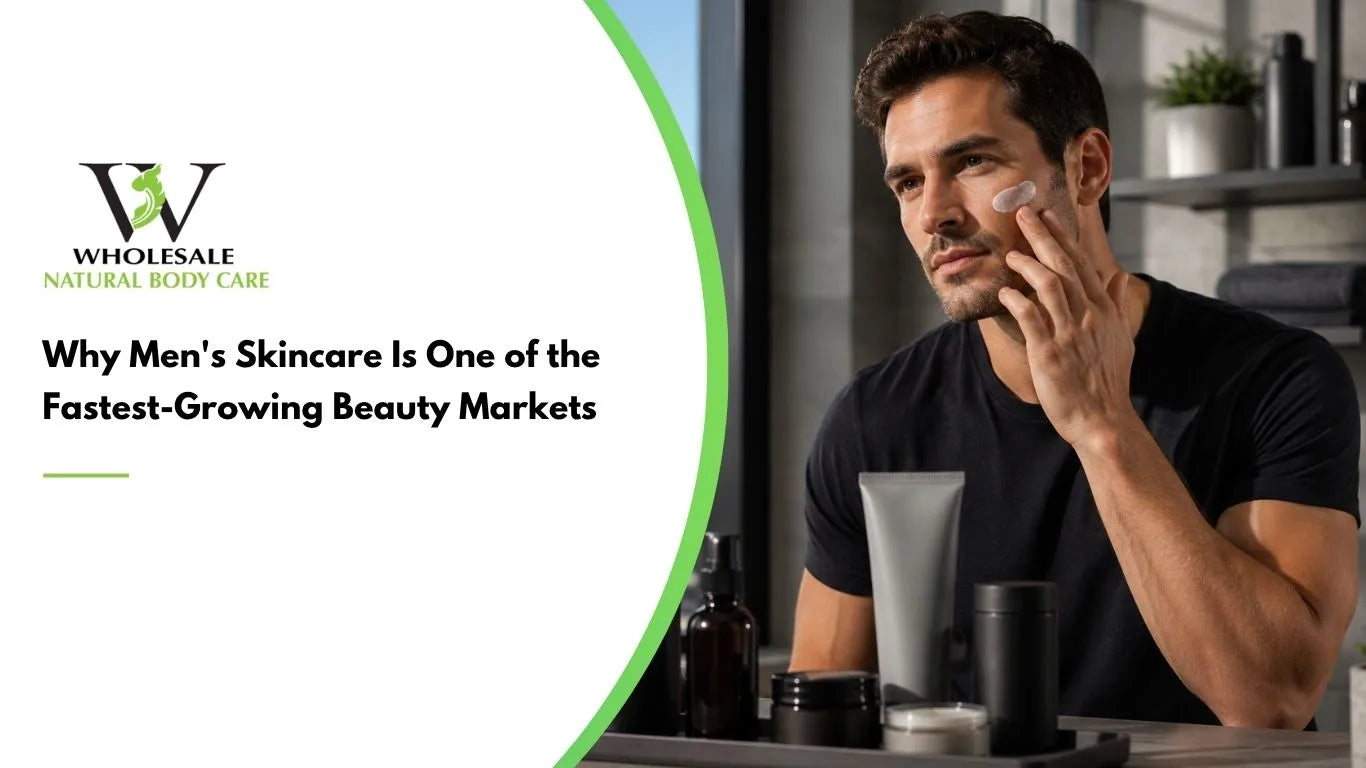
Men's skincare is growing fast because male consumers are finally treating skin care as routine self-care rather than an afterthought. Global analysts put the men's skincare products market at roughly 17 to 19 billion dollars in 2026, with growth rates well ahead of the wider beauty industry.
Rising grooming awareness and a fading stigma around male self-care are pulling more men into moisturizers, cleansers, and sunscreen. This shift is creating real demand for private label men's skincare, which lets new brands enter the category without building a lab from scratch.
How Big Is the Men's Skincare Market Today?
The men's skincare category has moved from a niche shelf to a genuine growth segment. North America holds the largest regional share of the global market, supported by strong grooming awareness and mature e-commerce channels. Industry researchers project the global market to grow at a compound annual rate between roughly 8 and 10 percent through the early 2030s, ahead of growth rates in traditional women's skincare. Moisturizers, cleansers, and oil control products currently lead demand.
Why Are More Brands Choosing Private Label Over In-House Formulation?
Building an in-house formulation lab takes years and significant capital. That is why many new grooming brands start with private label products instead, sourcing pre-formulated cleansers and moisturizers from an established manufacturer, then applying their own branding. This shortens time to market and keeps startup costs manageable.
How Do You Launch a Private Label Men's Skincare Brand?
Launching a private label men's skincare brand generally follows four steps.
First, define your customer, since needs vary by age and skin type.
Second, choose a manufacturer with documented testing and ingredient transparency, and ask for safety data sheets before ordering.
Third, order samples and test them yourself. Texture and absorption matter more here than in most beauty categories.
Fourth, keep packaging and messaging simple, since male consumers respond better to clear, direct descriptions.
What Should You Look for in a Manufacturer?
A reliable supplier of private label men's skincare should offer ingredient documentation, consistent batch quality, and formulas suited to common concerns like razor irritation and oil control. Ask about minimum order quantities and turnaround time before signing on.
Private Label vs In-House Formulation: What Is the Difference?
|
Feature |
Private Label |
In-House Formulation |
|
Startup Cost |
Low |
High |
|
Time to Launch |
Weeks |
Months to years |
|
Formula Control |
Limited to catalog |
Full control |
|
R&D Required |
None |
Extensive |
|
Best For |
New and growing brands |
Established brands with a lab |
What Are the Legal Requirements for Selling Skincare in the USA?
Skincare products sold in the United States are regulated as cosmetics under the Federal Food, Drug and Cosmetic Act. Labels must accurately list ingredients, net quantity, and business information. The U.S. Census Bureau tracks ongoing growth in health and personal care retail sales, reflecting the same demand fueling new brands in this space.
Frequently Asked Questions
What is private label men's skincare?
It refers to products manufactured by a third party and sold under a brand's own name and packaging.
Is men's skincare really growing faster than women's skincare?
Yes. Industry data shows the men's segment growing at a faster compound annual rate, though it remains smaller in total dollar volume.
What products should a men's skincare line start with?
Most new brands start with a cleanser, a moisturizer, and a sunscreen, since these cover a basic routine.
How much does it cost to start a private label skincare brand?
Costs vary by supplier, but many brands launch with a few thousand dollars in initial inventory and packaging.
Do men's skincare products need different formulations than women's?
Often yes. Men's skin tends to be oilier and thicker, and formulas frequently address razor irritation.
How long does it take to launch a private label skincare brand?
Most brands move from sourcing to selling within six to ten weeks.
Final Thoughts
Men's skincare is no longer a side category in beauty. It is one of the fastest-growing segments in the industry, and private label men's skincare gives new brand owners a practical way to enter it without years of formulation work. Explore Wholesale Natural Body Care to find men's skincare formulations ready for your next brand launch.


